New Model Predicts Critical Temperature of Superconductors
Superconductivity, the ability to carry current with no resistance, has been found in materials ranging from metals to oxides. Conventional BCS theory explains low-temperature metal superconductors well, but struggles with high-temperature oxide superconductors. The new phenomenological model relates the superconducting critical temperature (TC) to several measurable material parameters: carrier concentration (n), thermal expansion coefficient (α), interatomic distance (d), and ionic radius.
The work has been accepted for publication in Journal of Materiomics under the title "A phenomenological model for critical temperature of superconductors" (DOI: 10.1016/j.jmat.2026.101340). LIU Zi'an, a doctoral candidate, and Associate Professor GAO Zhiqiang are co-first authors; Professor SHI Xun is the corresponding author.
The model is based on the formation and protection of superconducting channels for charge transport. A sufficiently high carrier concentration enables effective screening of impurities, particularly ionized impurities, thereby suppressing carrier scattering. According to Thomas-Fermi theory, the screening length (λ) of a three-dimensional free electron gas follows the power law λ ∝ n-1/6, where n is the carrier concentration.
The model further considers how anharmonic atomic vibrations, characterized by the thermal expansion coefficient α, reduce the width of these channels as temperature increases. For cuprate superconductors, such as YBa2Cu3O7-δ, the electron gas is strongly confined within the CuO2 planes and along Cu-O bonds. This spatial confinement enhances screening and further shortens the screening length.
Based on these considerations, the researchers established the relationship
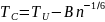
Here, n is the carrier concentration of the material; TU is the upper limit of the critical temperature as the carrier concentration approaches infinity; and B is a parameter determined by factors including the screening length λ, the thermal expansion coefficient α, and the interatomic distance d.
The model was evaluated using experimental data for cuprate superconductors, including YBa2Cu3O7-δ and Y-doped Bi2Sr2CaCu2O8+δ, as well as conventional superconducting metals such as Al, Cd, Hg, In, Nb, and Pb. Despite large differences in crystal structure, chemical bonding, and physical properties, all these materials follow the same −1/6 power law—evidence of the model's broad applicability.
This work establishes a phenomenological link between the superconducting critical temperature and macroscopic material parameters, offering a new approach to understanding superconductivity and designing materials with high critical temperatures. Further improvements in the measurement of key parameters may enable more accurate predictions of superconducting properties.
This research was supported by the National Natural Science Foundation of China, the Shanghai Municipal Government, and other funding programs.
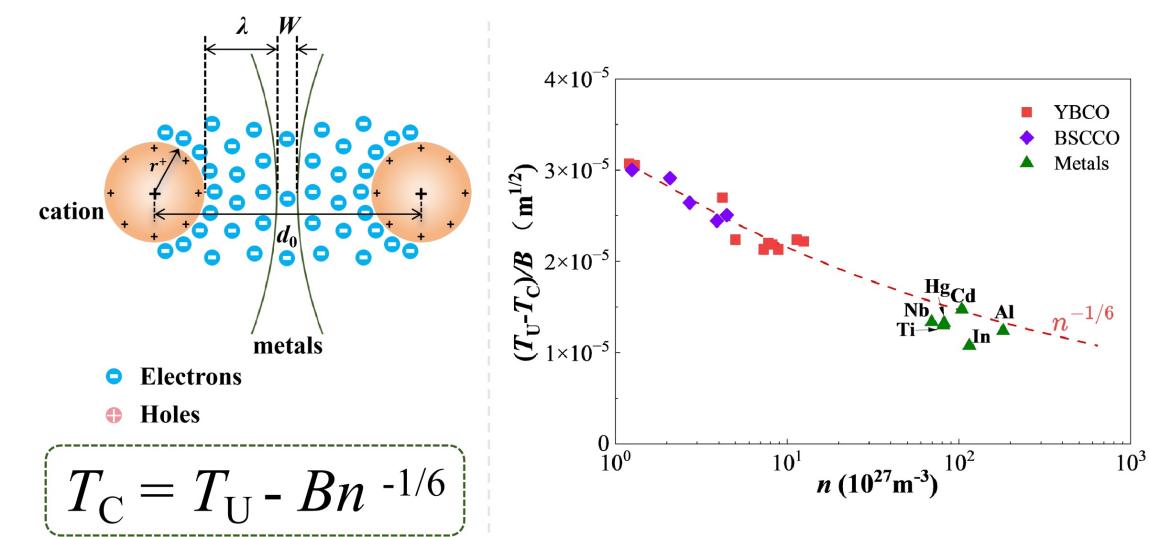
Fig. 1. Schematic illustration of the superconducting-channel model and its experimental validation.
Links: https://doi.org/10.1016/j.jmat.2026.101340
Contact: Xun Shi
Shanghai Institute of Ceramics, Chinese Academy of Sciences
E-mail: xshi@mail.sic.ac.cn
Published online: October 19, 2026