SICCAS 2026 International Student Application Guide
About us
Founded in 1928 as the Engineering Institute of National Central Academy, SICCAS has evolved into a dynamic institution dedicated to advanced inorganic nonmetallic materials research. In 1959, the Institute was separated into two independent Institutes. The ceramic part was reformed as the Shanghai Institute of Ceramic Chemistry and Technology, and then was renamed as the Shanghai Institute of Ceramics since the year of 1984.
SICCAS stands as a beacon of excellence in both pioneering basic research and innovative applied research, focusing on a diverse array of research areas. These include high performance ceramics and superfine microstructures, structural ceramics and composites, inorganic functional materials and devices, energy materials, inorganic coatings, artificial crystals, biomaterials and tissue engineering, environmentally friendly materials, the analysis and characterization of inorganic materials, and the technological study of industrial ceramics and ancient Chinese ceramics.
With a legacy marked by over nine decades of impactful contributions, SICCAS has garnered international acclaim, receiving 55 national-level awards, hundreds of CAS, ministerial, and provincial awards, and more than 400 scientific and technical prizes. In addition to hold approximately 3017 valid patents, we rank among the top 10 institutes in China for the number of citations in SCI-indexed papers.
Our Institute boasts a talented and diverse staff of over 750 individuals, including two CAS academician, three CAE academicians, and approximately 659 scientific researchers and technicians. SICCAS prioritizes the development of the next generation of materials scientists, engineers, and entrepreneurs, and has been authorized to grant Ph.D and Master’s degrees, along with hosting a circulating post-doctorate station. As of December 1, 2024, we proudly have 928 students, including 299 Ph.D. students and 629 Master students.
SICCAS has cultivated extensive global partnerships with renowned universities, institutes, and enterprises. Collaborations span continents, with joint labs established alongside organizations such as the Max Planck Institute (Germany), the National Institute for Materials Science (Japan), and the Academy of Science and Technology (South Korea). Noteworthy collaborations also include joint labs with industry giants like Sony and Corning, and over one hundred cooperative agreements with organizations such as General Electric, CERN, and Samsung. In 2010, SICCAS became a proud member of the International Energy Association.
Hosting numerous international conferences on modern ceramic technology, SICCAS has established itself as a global leader in the field. Notably, the Institute has organized the International Symposium on Ancient Ceramics nine times since 1982, solidifying its status as the world’s foremost platform for exchanging knowledge in ancient ceramics research.
Encouraging a culture of international exchange, SICCAS facilitates researchers’ participation in global programs and welcomes international researchers to engage in cooperative research or provide academic lectures. Over the years, esteemed individuals, including Nobel Prize winners Samuel Chao Chung Ting, Tsung-Dao Lee, and Ei-ichi Negishi, have graced our Institute with their visit.
Introduction to the Programs
The International Student Program of the Shanghai Institute of Ceramics, Chinese Academy of Sciences (SICCAS) is now open to global applicants. For the 2026 intake, the institute will exclusively admit doctoral candidates. Applicants may pursue advanced studies in two disciplinary fields: Materials Science and Engineering, and Chemistry. The doctoral program has a standard duration of four years. Upon fulfilling the graduation requirements and degree conferment criteria, students will be awarded a graduation certificate and a degree certificate from the University of Chinese Academy of Sciences.
General Requirement
(1) Non-Chinese citizens who abide by China’s laws and decrees, as well as UCAS’s rules and regulations.
(2) Being of good character and in good health without any infectious diseases or physical/mental disease that may affect the normal study.
(3) Applicants for master’s programs must possess a degree or academic qualification equivalent to a Chinese bachelor’s degree; applicants for doctoral programs must possess a degree or academic qualification equivalent to a Chinese master’s degree.
(4) English proficiency is required. For Chinese-instructed programs, the applicant’s Chinese proficiency shall reach at least HSK Level 5 with no less than 180 scores.
- Students must submit their applications online. Please register an account and complete personal information on the International Student Online Application System of the University of Chinese Academy of Sciences (https://is.ucas.ac.cn/). The Shanghai Institute of Ceramics will review the application materials in accordance with the admissions regulations.
- Reach a mutual agreement with a doctoral supervisor from the SICCAS. Both the applicant and the prospective supervisor must sign the " Acceptance Letter."
- SICCAS will organize interviews for international student applicants. The interviews will rigorously assess the applicant's foundational knowledge in their field and their ability to comprehensively apply knowledge to scientific research, with a focus on evaluating their understanding of cutting-edge developments in the discipline and their potential for doctoral-level training.
- The University of Chinese Academy of Sciences will review the application materials as per the admissions regulations, convene expert evaluations by discipline clusters, and select the most qualified candidates for admission.
- The relevant higher authorities will review and approve scholarship applications, finalizing the list of scholarship recipients.
- Provisionally admitted applicants will be registered in the "National Information Management System for International Students in China" for pre-visa approval screening.
Important Note:
- Application Period for SICCAS Doctoral Programs: November 1st, 2025, to January 31st, 2026. In principle, the Institute will stop accepting applications after February 1st, 2026.
- Scholarship Application Deadline (SICCAS only admits scholarship recipients): All scholarship application procedures must be completed by January 31st, 2026
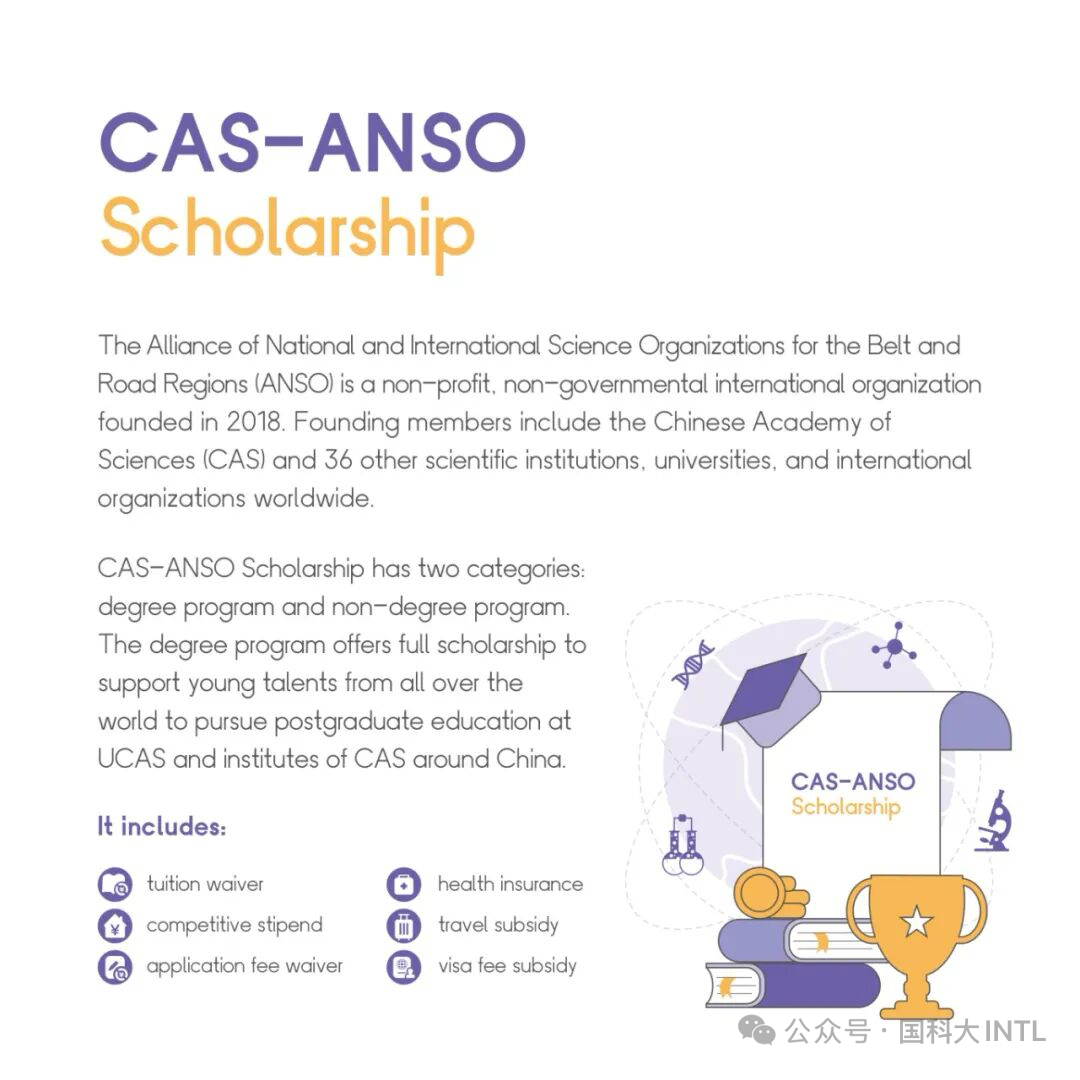
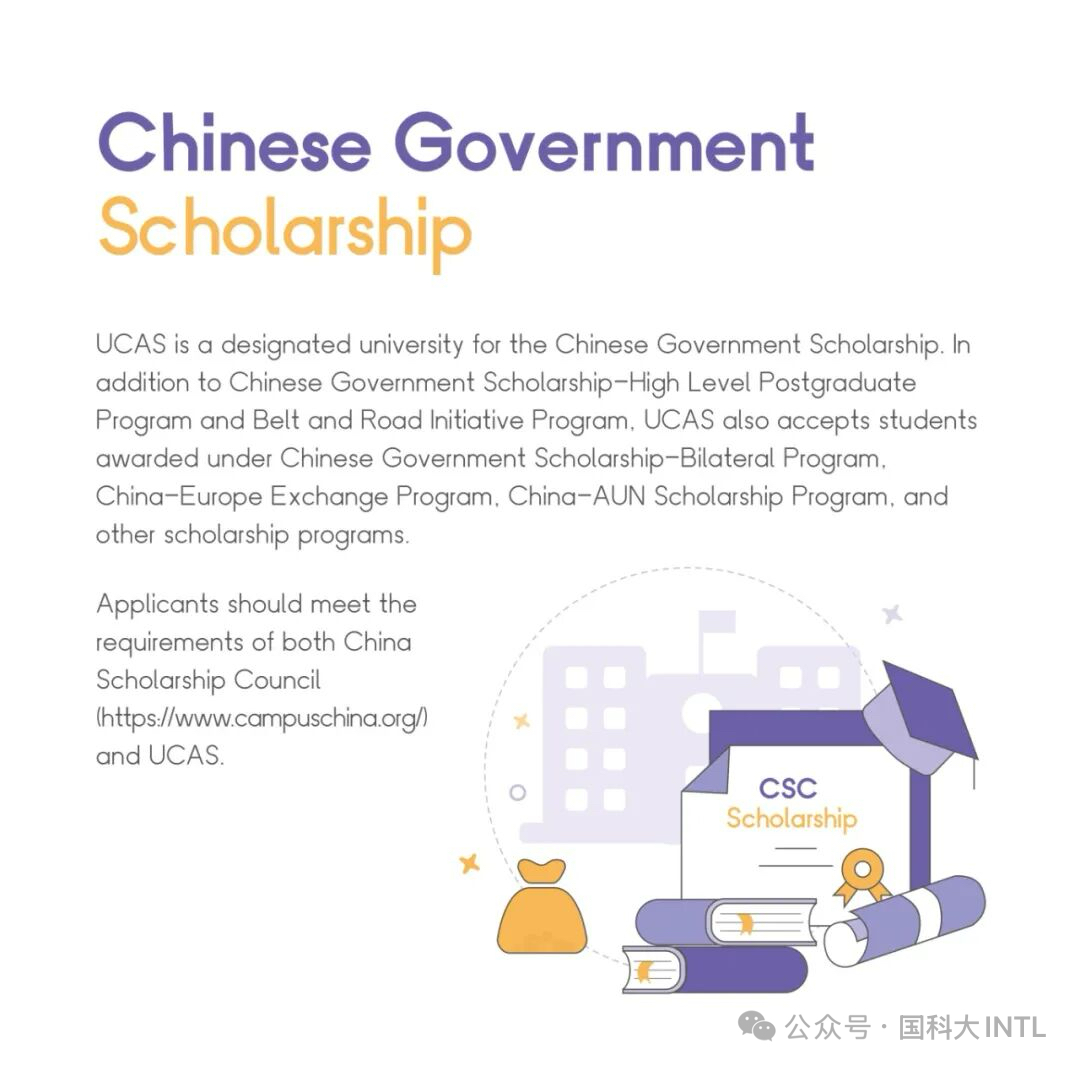
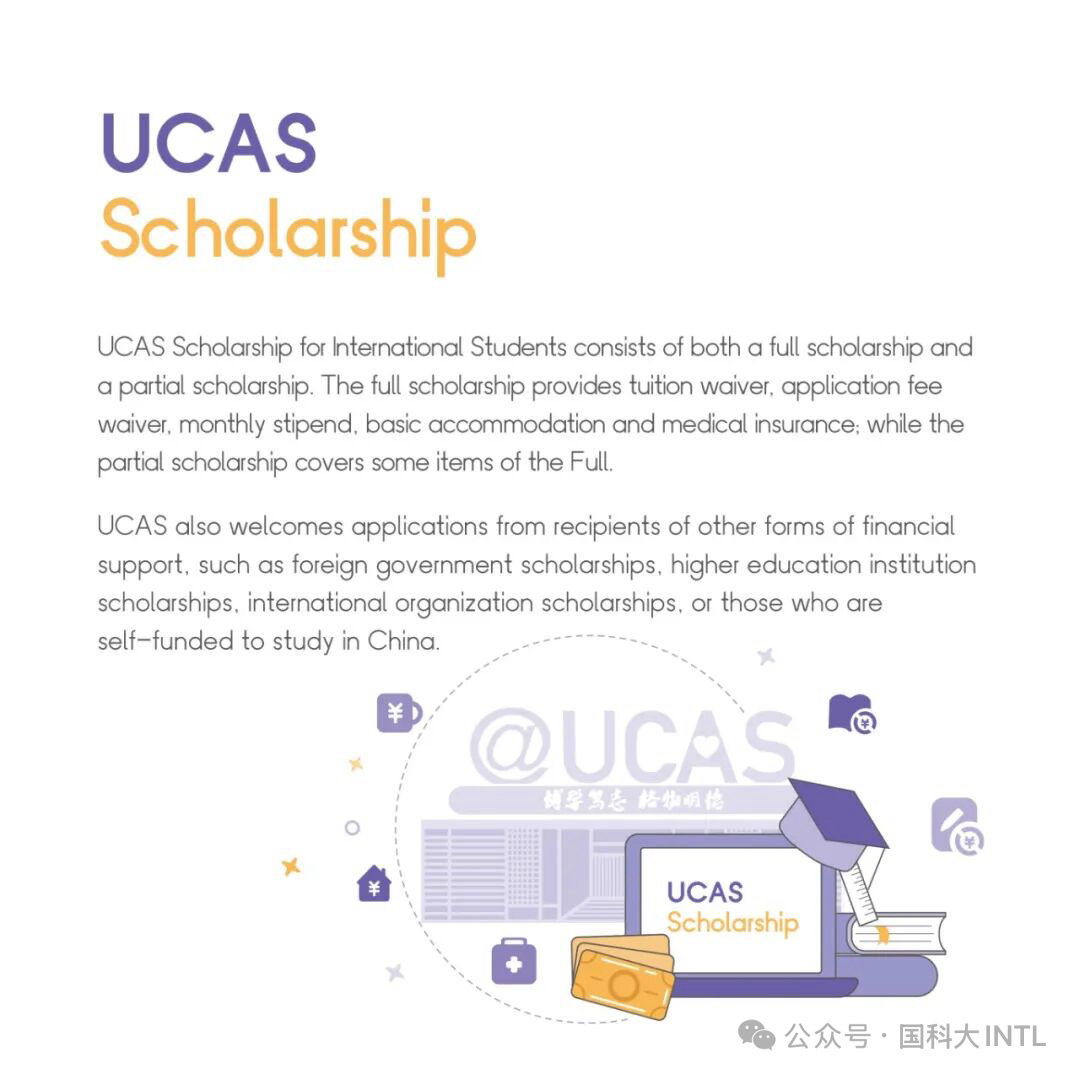
Scholarship Programs Offered by UCAS
International Students Office, University of Chinese Academy of Sciences
No.80 Zhongguancun East Road, Haidian District, Beijing, 100190, China
Email: master@ucas.ac.cn (Master’s program)
phd@ucas.ac.cn (PhD program)
Website: http://english.ucas.ac.cn
Address: No.585 Heshuo Road, Shanghai, P.R.China 201899
Email: yanjingyi@mail.sic.ac.cn
Website:http://english.sic.cas.cn